

The Crucial Milestones of a Junior Miner
Success in junior mining hinges on navigating four key milestones—each a critical inflection point that can dramatically impact share prices:
- Acquiring a Property: The first step, and often greeted with positive sentiment. The right property, especially in a mining-friendly jurisdiction, can spark early excitement and speculative buying.
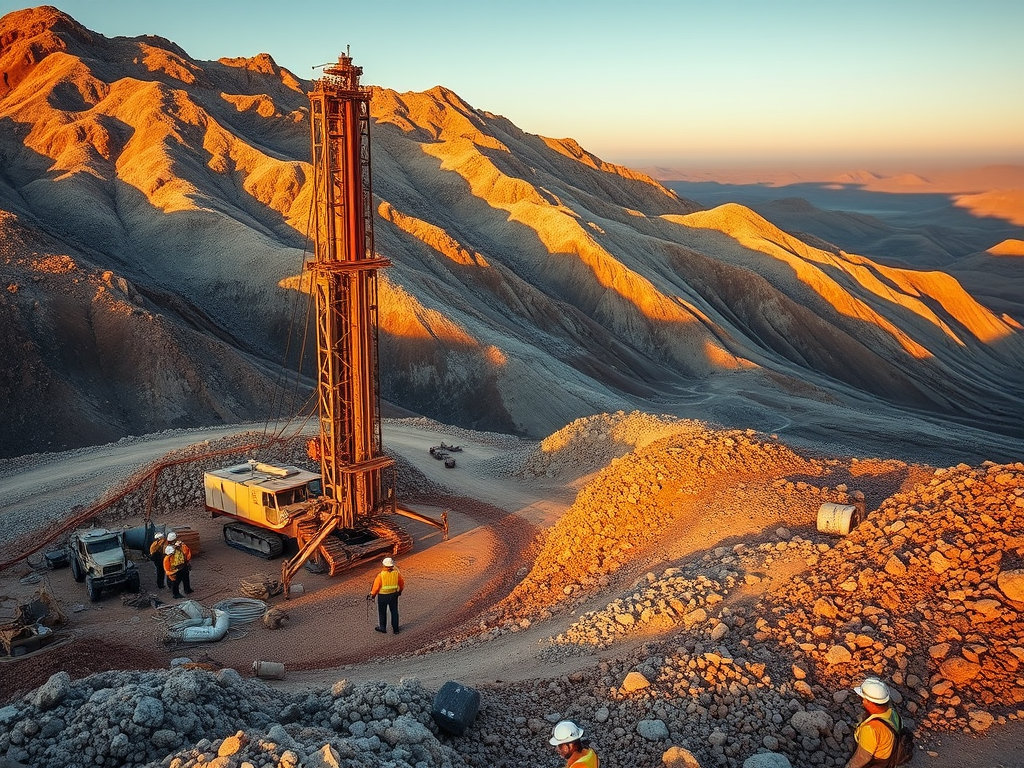
- Drill Results: The ultimate make-or-break moment. Strong drill results can catapult share prices overnight, while disappointing outcomes can erase value just as quickly. Understanding industry benchmarks for resource grades and quantities is essential. For instance:
- Gold: Anything above 1g/t is considered solid.
- Uranium: Grades exceeding 1% U₃O₈ are highly desirable.
- Copper: Grades over 0.5% Cu are notable in quality jurisdictions.
- Preliminary Economic Assessment (PEA): This initial economic study assesses a project’s potential profitability. A positive PEA can attract serious investor attention and trigger a market re-rating.
- Buyout or Development Advancement: The final goal for many juniors is either acquisition by a major mining company or progressing to the development stage. Both scenarios can deliver significant shareholder value.
Other catalysts that can influence share prices include strategic investments from major mining companies, robust economic feasibility studies, or the securing of crucial partnerships and permits.
Finding the Right Players
Not all junior miners are created equal. Identifying the right company involves assessing key attributes:
- A Reasonable Market Cap: Too small, and raising capital becomes a challenge. Too big, and the potential for explosive growth diminishes.
- A Tight Share Structure: Avoid companies plagued by constant dilution. Excessive share issuance erodes shareholder value and dampens future gains.
- Strong Financials: A well-funded company should have enough capital to sustain drilling operations for at least a year without resorting to toxic financing.
- Proven Management: Leadership with a track record of discoveries, effective capital allocation, and industry connections is invaluable. Avoid teams that rely on hype over substance.
The Project: Hidden Treasure or Money Pit?
A promising project involves more than just mineral presence—it’s about turning that potential into a profitable mine.
- Location Matters: Favor jurisdictions known for mining stability like Canada, Australia, and the U.S. Regions with political instability or permitting challenges pose significant risks.
- Stage of the Project:
- Explorers: The highest risk but also the highest reward. They’re searching for a discovery, though most won’t find one.
- Developers: These companies have identified a resource and are working through economic studies and permits. The risk is reduced, but challenges remain.
- Producers: Actively mining companies offer lower risk, but their days of exponential gains are likely behind them.
- Grade and Size Matter: The richer the mineral content, the better. But size also matters—large-scale projects with scalable potential are more attractive to investors.
- Infrastructure is Critical: Projects near existing infrastructure (roads, power, ports) have a significant advantage. Remote projects can face insurmountable logistical and financial challenges.
Timing: When to Strike
Junior mining stocks live and die by catalysts. Recognizing when to enter and exit is essential to capturing gains and minimizing losses.
- Drill Results: Positive results can trigger rapid price increases, but misses often result in sharp corrections.
- Economic Studies: PEAs and Feasibility Studies can redefine a company’s valuation and highlight economic potential.
- Strategic Investments: When majors like Rio Tinto or Barrick Gold invest, it signals confidence. Follow the smart money.
- Commodity Cycles: Understanding market cycles is crucial. Buy when sentiment is low, and valuations are attractive. Be cautious when retail investors flood the market at peak valuations.
Riding Market Waves
Commodity markets are inherently cyclical. Understanding these cycles helps position investments for maximum returns.
- Buy When Prices Are Low: Accumulate quality juniors when commodities are out of favor. Patience is key.
- Sell Into Strength: Take profits during commodity booms. Chasing euphoria often ends in losses.
- Break-even Costs Matter: Companies with lower production costs are more resilient in price downturns. Avoid miners whose break-even prices exceed current market rates.
Play It Smart: Profit & Protect
Smart investing in junior miners isn’t about luck—it’s about discipline and strategy.
- Define Entry and Exit Points: Know your strategy before investing. Consider selling enough to cover your initial investment once shares double or triple in value.
- Diversify Across Commodities: Spread risk by investing in a mix of commodities. Diversification can protect against single-bet failures.
- Identify Red Flags: Avoid companies with chronic dilution, insider dumping, or vague project updates. If something feels off, it probably is.
Final Thoughts
Junior mining stocks aren’t for the faint-hearted. The volatility is real, but so are the rewards for diligent and strategic investors. With the global push for critical minerals and favorable policy shifts in key jurisdictions like Canada, this could be a pivotal time to focus on the sector.






 Daily Miner